Executive Summary
The recent geopolitical shock in the Middle East has reinforced what we have long believed at Twynam. Real decarbonisation will be driven by economics, not virtue. The Strait of Hormuz handles 38% of global seaborne crude and 13% of chemicals, creating untenable concentration risk for legacy industries. Global fertiliser prices have surged 30 to 40%, while crude prices in Asian markets jumped 104%, driving a 77% rise in Indian EV sales. Portfolio companies like PlasmaLeap and Alt Mobility exemplify how decentralised, electrified alternatives outcompete fossil dependent incumbents on cost, resilience, and unit economics.
A global wake-up call that reflects Twynam's long held vision
The recent geopolitical shock in the Middle East triggered the market's most predictable reflex: crude spiked and equities retreated globally. While most analysts view this through the traditional lens of supply chain disruption and commodity inflation, we see a different signal at TWYNAM.
As a global venture capital firm focused on the exponential transition, our thesis is anchored in structural economic shifts rather than temporary market cycles. Deployment of decarbonisation technologies is accelerating purely out of economic necessity. The Strait of Hormuz, handling 38% of global seaborne crude and 13% of chemicals, including fertilisers, has become an untenable concentration risk for legacy industries.
Our fundamental belief remains the same. Real decarbonisation will be driven by consumers making decisions based on financial optimisation. Technologies that reduce global carbon intensity must therefore outperform on first principles: they need to be better, faster, and cheaper than incumbent alternatives. Dominant economics without subsidies will always win the market. The current geopolitical volatility is effectively subsidising the clean transition by making fossil dependent alternatives increasingly difficult to justify on cost. At the same time, the core inputs of the clean energy era including solar, wind, storage, and increasingly localised electricity systems are inherently harder to weaponise, blockade, or concentrate within a single geopolitical chokepoint.
Agriculture and electrified alternatives to Haber-Bosch
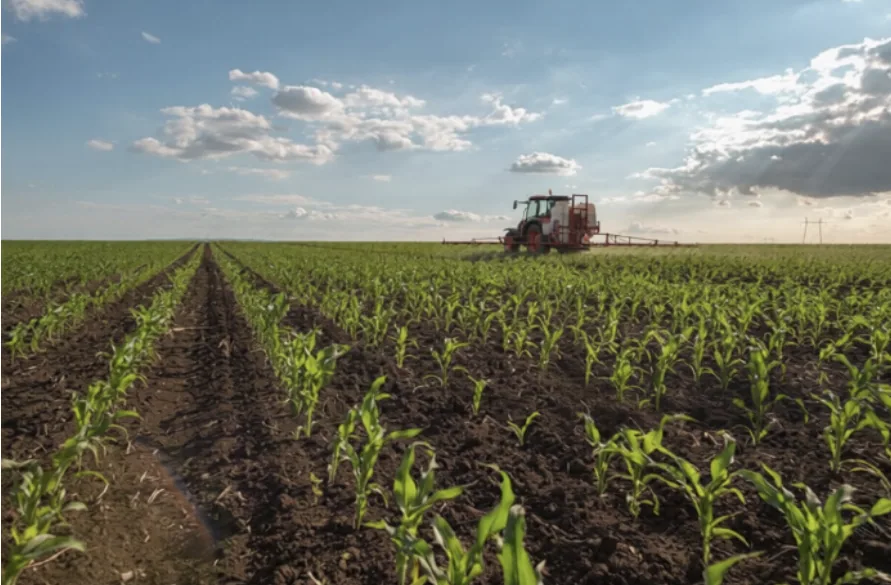
Let us examine the global agricultural sector, specifically the production of nitrogenous fertilisers. The fragility of centralised, fossil dependent supply chains is being felt acutely right now, with global fertiliser prices already up 30 to 40%. The traditional Haber Bosch process sits directly in the line of this volatility. It remains deeply exposed to gas prices and global shipping routes, while also accounting for roughly 2% of global emissions and consuming 1 to 2% of global energy supply. Farmers around the world remain deeply exposed to international shipping routes and foreign gas prices.
Our portfolio company PlasmaLeap Technologies offers a radical, decentralised alternative. Based in Sydney, PlasmaLeap bypasses the Haber Bosch process altogether, producing nitrogen fertilisers using only electricity, water, and air. By deploying containerised systems directly on farm or within regional hubs, agricultural operators are far less exposed to the geopolitical chokepoints that continue to shape global fertiliser markets.
The technology protects farmers from price volatility while continuing to outperform market pricing during less turbulent times. PlasmaLeap exemplifies the electrification of industry, producing fertiliser directly at the point of use. At its core, this is what transformative innovation looks like: replacing a fragile, emissions intensive, centralised supply chain with technology that is inherently more resilient and decentralised.
Mobility: The TCO Tipping Point
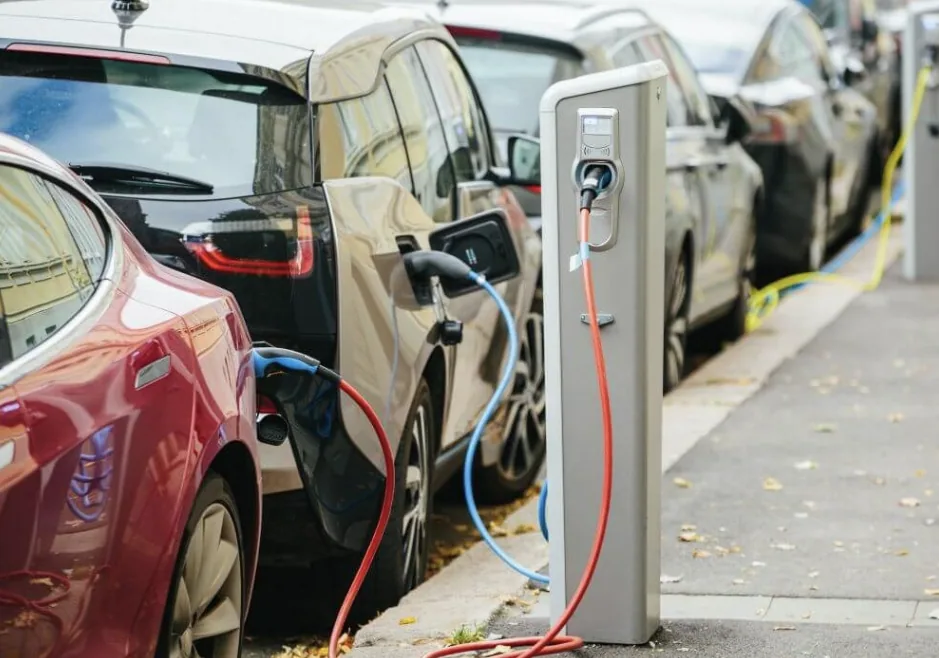
The economic calculus is shifting even faster in the global mobility sector. Across Asia, electrification is accelerating rapidly, and India offers a clear example of this broader trend. With 50% of its crude oil imports flowing through the Strait of Hormuz, the recent conflict translated almost immediately into a 104% surge in crude prices within Asian markets. Transport already accounts for 13% of India's emissions, making mobility one of the most important frontiers for our investment mandate.
This fuel price shock fundamentally rewrites the payback period for commercial fleet operators. When fuel costs can spike overnight, the total cost of ownership advantage of electric vehicles becomes impossible to ignore. We saw a corresponding 77% rise in Indian EV sales. Alt Mobility, our B2B full-stack EV platform, is well positioned to capture this surge in demand. By offering leasing, insurance, charging, and maintenance through a single platform, they make the transition materially simpler for fleet owners.
As fuel prices surge, the transition to two and three-wheeler electric vehicles quickly moves from a sustainability objective to an immediate operational imperative for preserving margins. The market response has reflected that urgency. Alt Mobility has scaled rapidly, building strong ARR momentum with significant milestones ahead. They have grown at over 200% per annum, showcasing how rapidly a market adopts technology when the unit economics perfectly align.
The Deflationary Future
The geopolitical volatility we are witnessing is ruthlessly exposing the deep economic flaws of fossil dependence. Clean technologies are fundamentally deflationary, highly efficient, and inherently resilient. At TWYNAM, we invest in founders building products that represent a leap beyond the incumbent. The current market dynamics are proving that our portfolio is not just environmentally necessary; it is economically inevitable. By focusing strictly on unit economics and scaling breakthrough technologies, we are funding the architecture of a vastly more robust global economy.