Executive Summary
The Asia Pacific region generated roughly three times more electricity than North America in 2024, yet China and India have adopted fundamentally different models for large-scale electrification. China's transmission and distribution losses sit at 3.4%, outperforming North America (5.5%) and the global average (6.1%), while India's AT&C losses remain at 14.2%, with the majority now commercial rather than technical. Generation is infrastructure capital. Delivery optimisation is venture capital. Distribution optimisation can be delivered through modular hardware and software with venture-level returns.
Introduction
The centre of gravity in global electrification has shifted east. In 2024, the Asia Pacific region generated roughly three times more electricity than North America, primarily driven by new capacity in China and India. Whilst both regions have grown significantly, they have adopted fundamentally different models for large-scale electrification, creating distinct venture opportunities.
This APAC dominance is relatively new. In 2010, North America still generated more electricity than China. Only through sustained government investment has the relationship reversed. In 2024 China and India both invested approximately 3% of GDP into clean energy projects, a continuation of their recent trajectory. Their investment has precipitated immense growth: between 2010 and 2024, China and India's annualised generation expansion approximated 6.5% and 5.6% respectively, carrying the rest of the APAC region, which only grew 2.0% over the same period.
Generation, however, is only one component of electrification. Distribution systems have also undergone vast transformations. Demand growth and a mix shift in generation toward intermittent resources have changed grid dynamics, stressing the physical assets, marketplaces, and organisations that operate energy networks. The electrification bottleneck is shifting downstream, and some geographies are managing this better than others.
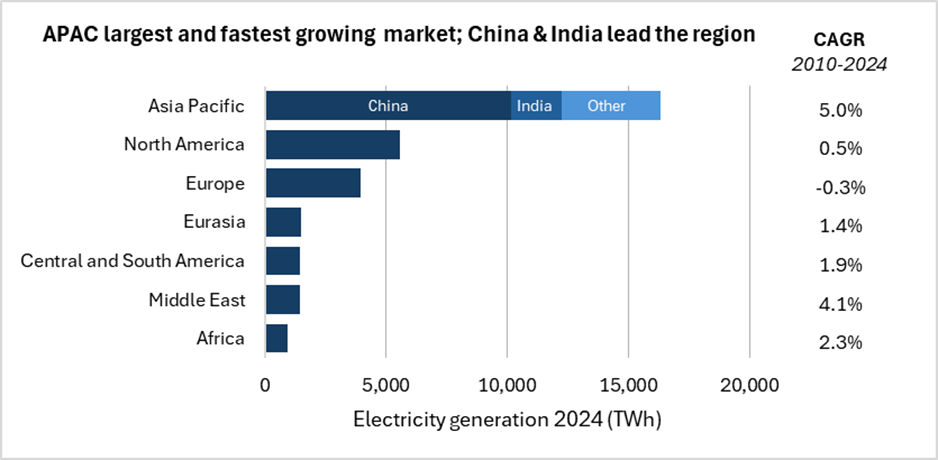
Figure 1 Based on data from International Energy Agency (2024), as modified by Twynam. Data source: International Energy Agency (2024), World Energy Outlook 2024, IEA. Licence: Creative Commons Attribution CC BY-NC-SA 4.0.
China's Efficiency Through Scale and Coordination
Since the 11th Five-Year-Plan (2006-2010), China has heavily invested in electrification to secure a clean and stable energy resource. In doing so, China has positioned itself as a global leader in investments into renewables, nuclear, and transmission & distribution.
In China, average household electricity prices have remained broadly stable (CNY 0.50-0.55/kWh) for about a decade (2015, 2021, 2025), implying a decline in real terms after inflation. China's regulated tariff structure, supported by strong state coordination, has largely protected customers from the system's growing capital costs, underscoring the country's priority to support continued economic growth.
The combination of long-term planning and investment focused on energy security rather than short-term profitability has created a highly efficient network. China's transmission and distribution losses amounted to 3.4% in 2023, outperforming North America and the global average (5.5% and 6.1% respectively). Absent step-change breakthroughs in generation (e.g., nuclear fusion), the remaining solutions are largely incremental, and large opportunities lie in optimisation rather than wholesale upheaval of the network.
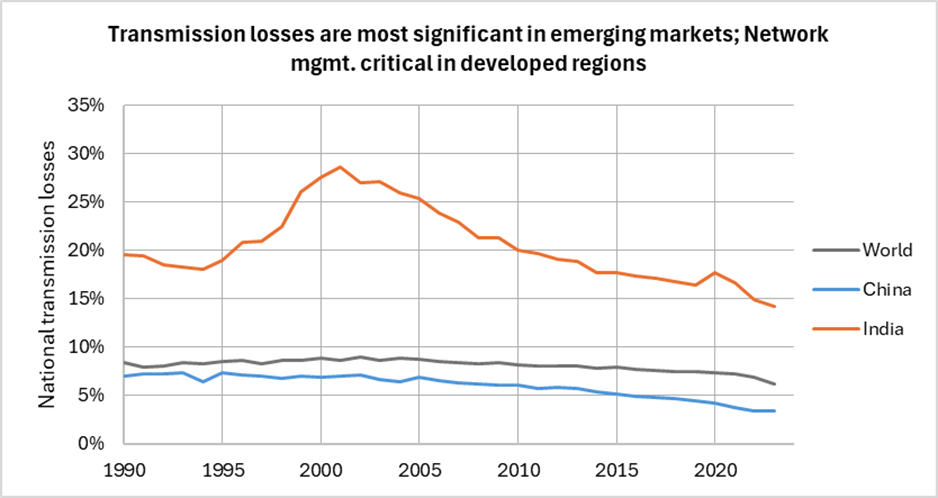
Figure 2 Based on data from International Energy Agency (2025), as modified by Twynam. Data source: International Energy Agency (2025), Energy Statistics Data Browser, IEA. Licence: Creative Commons Attribution CC BY-NC-SA 4.0.
A Shift From Generation to Delivery Economics
India's story is different. Electrification in India has been driven by expanding access, rising consumer and industrial demand, and a desire for energy independence & security. Between 2016 and 2024, US$293B was invested into the national power sector, with 34% concentrated in fossil fuel supply and generation projects, 29% in low-emissions power, and 21% in grid infrastructure and storage. Despite this, aggregate technical and commercial (AT&C) losses remain high, with national losses sitting at 14.2% in 2023, compared with 3.4% in China.
AT&C losses combine physical inefficiencies, such as energy lost through ageing conductors and transformers, with commercial leakage, including theft, faulty metering, and non-payment. Investment in grid infrastructure has shrunk technical transmission losses to a reasonable ~3.6% in 2025, meaning the majority of remaining losses are now commercial. Rapid electrification in a cost-sensitive market has incentivised the exploration of cheaper power, with customers bypassing "official" systems to lower costs.
Together, China and India illustrate two paths emerging markets can take. Rapid electrification places pressure on downstream systems. Constraints in generation shift to constraints in delivery as networks grow, leading to inefficiencies if not carefully managed.
Why India Remains Constrained
India has attempted to transform for decades. As early as 1998, the Indian government began reforming the national energy network, disaggregating generation, transmission, and distribution functions into separate entities. This worked well in some regions by removing the government-owned network monopoly and introducing competitive market dynamics to lower prices.
Right now, India's energy market is managed regionally with distribution companies (DISCOMs) controlling networks in each state. While formally standalone entities, these DISCOMs are effectively extensions of state governments and are regularly used to win public favour. As a result, power prices are heavily politicised, with governments promising free or low-cost power to agricultural and residential users. They offset this with a tariff on commercial and industrial (C&I) users to cover the cost. This model has two core issues.
First, the tariff model has not (to date) been designed to completely offset the agricultural and residential power subsidies. Tariffs struggle to capture the financial shortfall from AT&C losses, leaving DISCOMs to foot the bill.
Second, inflated pricing for C&I users incentivises businesses to bypass or exit the system entirely, meaning DISCOMs struggle to collect sufficient tariffs to offset subsidised customers.
Both factors have driven DISCOMs into significant debt, requiring government bailouts on several occasions. As a result, DISCOMs lack the financial capacity to invest in the technologies required to reduce these losses, creating a self-reinforcing cycle.
There are regional pockets of higher performance. For example, Delhi cut AT&C losses from approximately 50% to less than 10%, driven primarily by the private investment of Tata into the local DISCOM to fund the deployment of pre-paid electricity metering and a crackdown on C&I power losses.
More recently, the Revamped Distribution Sector Scheme (RDSS), which deployed US$35B between 2020 and 2025, is rolling out smart metering and grid analytics across a large portion of the country. These technologies increase billing accuracy and make theft harder via meter tampering. The programme is broadly viewed as a success, with AT&C losses sitting within their targeted band of 12-15%, materially down from their near 30% highs but still double the global average.
Fixing the Problem
What will it take to reduce India's AT&C losses to "normal" levels? The RDSS outlines several initiatives widely viewed as necessary.
Smart metering: increasing national penetration and removing manual meter auditing.
Grid analytics: using network data and advanced analytics to detect theft.
Technical capability: training DISCOM operators to utilise these systems effectively.
Conductor upgrades: replacing bare and aged conductors to make it harder to tap into lines.
Tariff reform: focusing on cost management to allow sustainable operation of DISCOMs.
The problem's persistence is proof that no single policy change or technological innovation is enough. Instead, progress will likely come from technologies that improve network economics without requiring systemic reform. Being able to deploy technologies independently of the bureaucratic and capital-constrained DISCOMs will unlock an unfair advantage both in access to funding and speed of deployment.
A Venture Opportunity?
In Western energy markets, we increasingly see electrification bottlenecks shift downstream, moving from generation to distribution and utilisation as renewable integration and demand surges stress grids. China shows what a coordinated expansion can achieve: low losses, stable tariffs, and compounding efficiencies. India shows what happens when the economics of delivery lag electrification.
Generation is infrastructure capital. Delivery optimisation is venture capital.
Unlike generation infrastructure, which requires immense CAPEX and is more suited to infrastructure funds, distribution optimisation can be delivered through modular hardware and software. Examples include:
- Efficient, flexible power conversion technologies
- Dynamic line/grid monitoring and intervention technologies
- Novel network architectures (e.g., microgrids, VPPs)
These technologies have the potential to augment and disrupt existing networks, delivering megatonne-scale CO2 reductions, while maintaining strong unit economics and venture-level returns.
Emerging markets are entering a new phase, one defined less by building generation and more by fixing the economics of delivery. We're excited by this transition. If you're building technologies that improve how electricity is delivered, measured, or financed outside of traditional utility structures, we want to speak with you.