Executive Summary
Twynam has invested in Vertical Oceans alongside SOSV in their Series B. raise The company operates autonomous, AI-controlled shrimp farms which have so far operated with zero disease instances across 20 consecutive batches. Their latest forecasts promise up to a 40% cost saving versus Asian open-air pond farming, while the compressing their shrimp's embodied emissions 20-fold.
Twynam is proud to announce its investment into Vertical Oceans, investing alongside SOSV in their Series B fundraise. Vertical Oceans builds and operates autonomous, AI-controlled shrimp farms that grow fresher, better-tasting shrimp at a lower cost and carbon footprint versus traditional open-air-pond aquaculture. Further, their farms are both modular and spatially efficient, allowing for tailored supply volumes and tight co-location with urban demand.
Shrimp Farming Is Broken
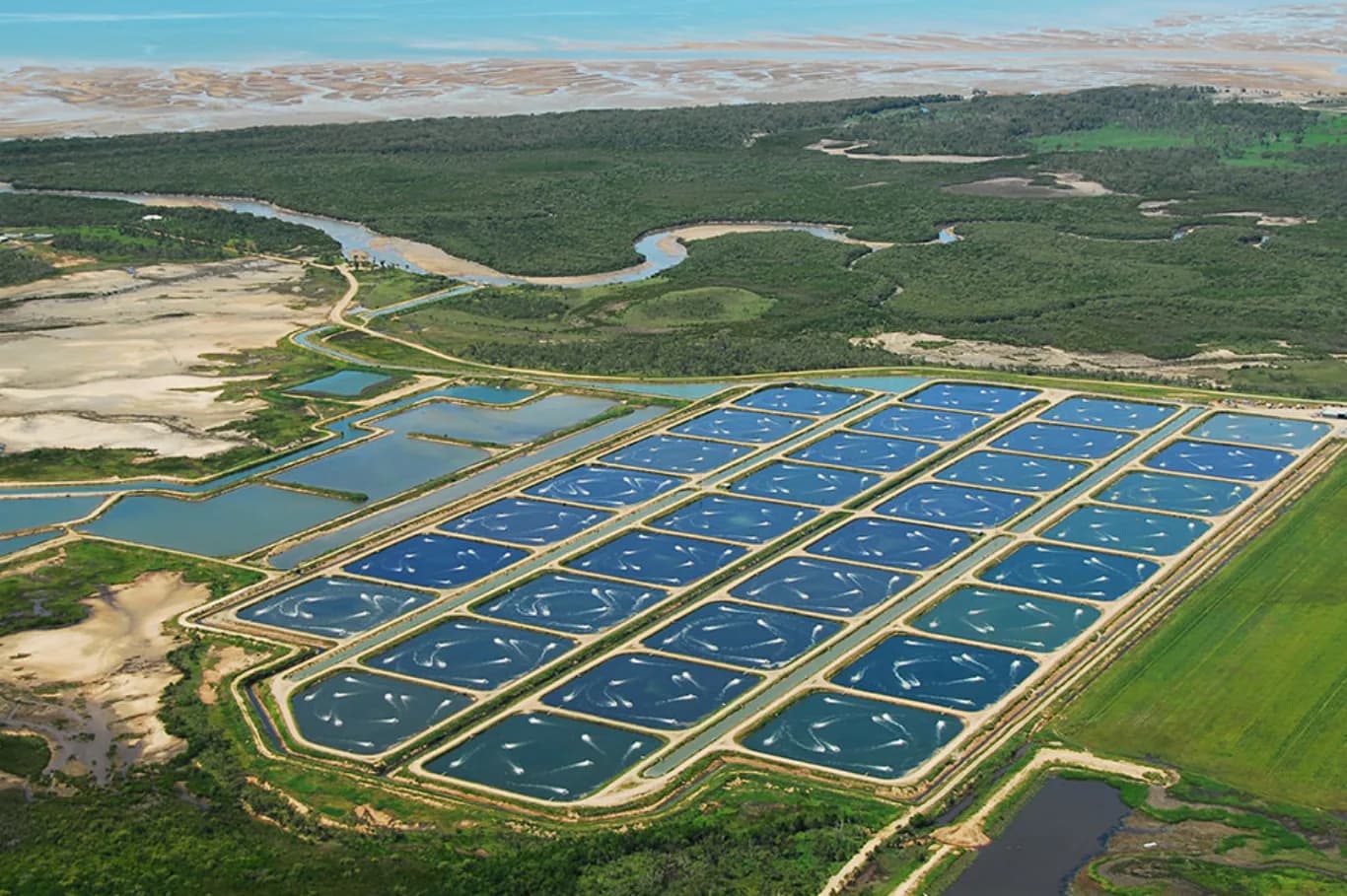
Global demand for shrimp is exploding with consumers increasingly prioritising lean, high protein food sources. This demand is concentrated in Asia, where limited natural resources have required intensive farming operations to lift supply. Despite this, farming practices have not changed in decades. Open-air ponds dominate the market, yet their lack of sophistication introduces population health challenges with crop failure rates above 40% and survival rates below 70%. Disease is a major driver: Early Mortality Syndrome alone caused an estimated US$11.58 billion in losses in Thailand between 2010 and 2016, and more than 100,000 job losses, forcing farmers into a cycle of antibiotics and reactive treatment that damages both the product and the surrounding ecosystem.
The Challenges Facing Aquaculture
Beyond disease, the industry carries a heavy carbon and trust burden. Conventional shrimp farming generates an estimated 135 million tonnes of CO2e a year, twice that of salmon production. Approximately 94% of the shrimp eaten in the US is imported, exposing it to expensive cold chain logistics and increasingly volatile tariffs. Adding to the domestic challenges, major US seafood brands are facing class-action lawsuits based on greenwashing and poor animal husbandry practices. There is a growing credibility gap that fresh and verifiably local production is well placed to close.
An AI-native alternative, grown in a shipping container
Vertical Oceans has spent five years re-engineering shrimp farming from first principles. The results speak for themselves: zero disease across 20 consecutive production batches driven by intelligent control, and clever system design. The process is highly automated and importantly, closed loop. Shrimp waste is upgraded into a macroalgae feed, which is used to rear more shrimp while also filtering the water beyond drinking-water standards and eliminating a costly waste stream. Impressively, Vertical Oceans have now run for over 15 months without a single discharge event.
The core iHAB unit is a sealed, insulated module that runs at 99.4% autonomy, consuming 450W of power, while producing 1,650kg of shrimp a year from 12m² of floor space. Inside Vertical Oceans' AkuaTower system, a robotic gantry lifts, splits and cycles iHABs automatically, so a single facility can run with a fraction of the labour of an open-air pond.
Every tank is controlled by Tide OS, a real-time system managing water chemistry and feeding. That data feeds up to Moana Brain, a probabilistic AI engine trained on more than 125,000 parameters to behave like a biological digital twin of the whole farm. Growth outcomes are simulated before they happen, and this information is used to coordinate interventions across the facility.
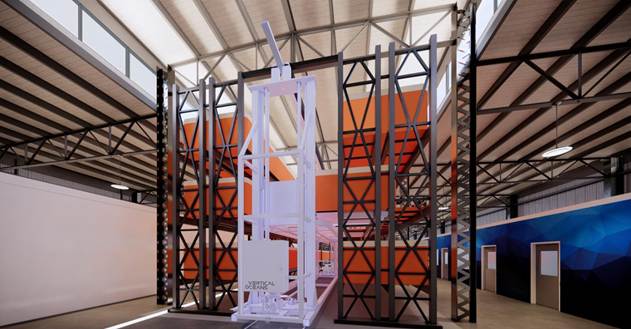
AkuaTower's automated racking system cycles iHAB growing modules with minimal human intervention.
Our Investment Thesis
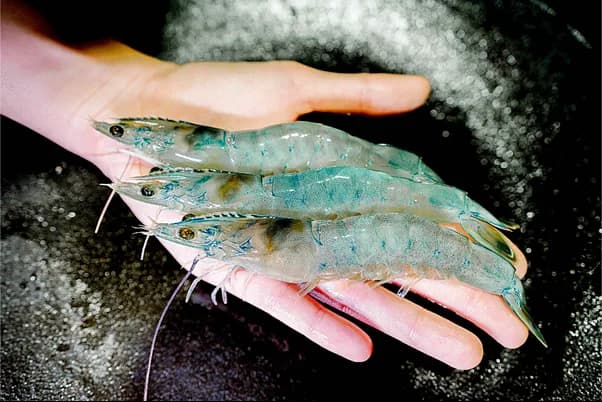
Price and quality drive customer decisions and Vertical Oceans wins on both. At full 400-tank scale, Vertical Oceans' forecast production cost could undercut Asian open-air pond farming by as much as 40%, even before accounting for disease related losses. On quality, blind taste testing has verified their shrimp to match or exceed the flavour of wild-caught (based on company-conducted testing) while their jumbo size grade classification allows them to command premium pricing over conventional shrimp.
Wild-caught taste and jumbo pricing at industrial-scale cost is a unique combination and embodies our mandate: new climate technologies must incentivise adoption by leading the market on value or cost. Vertical Oceans does both and the carbon case follows. Vertical Oceans forecasts that their technology has the potential to compress the embodied emissions of farmed shrimp 20-fold to 1.1kg, driven by collocating production with demand and raising yields far above the rest of the market.
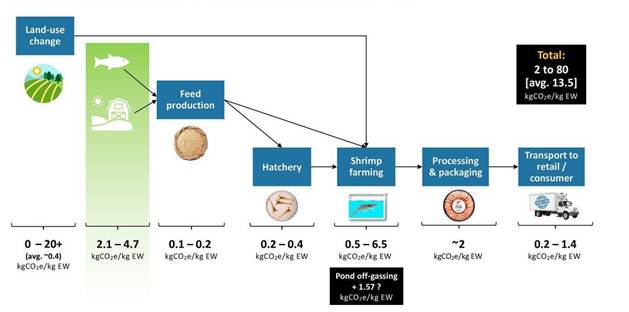
Vertical Oceans removes the most carbon-intensive steps in the conventional shrimp supply chain.
A team that's done this before
Vertical Oceans was founded in 2020 by CEO John Diener, who spent years in tropical marine aquaculture nutrition and genetics before deciding to build a better shrimp farm. He's joined by CTO Enzo Acerbi, a computational biologist who previously worked as a senior data scientist at Danone. With their experience and expertise, it's no surprise to see what they've accomplished so far.
Our Relationship with Aquaculture
Agriculture and food production are central to Twynam. We've long looked for a better way to farm seafood, one that doesn't trade quality for sustainability, or cost for either. Vertical Oceans is that business. We're proud to back the team as they scale from a single Singapore facility to parallel builds in Gilroy, California and Ireland, and we're looking forward to supporting them as they take shrimp farming out of the open pond for good.
Vertical Oceans remains subject to a range of risks including certification and regulatory approval risk, technology performance risk, customer adoption risk, manufacturing and scale-up risk, competitive developments, and broader aquaculture market conditions. While we believe the company is well positioned, there is no guarantee that performance targets, environmental outcomes or growth expectations will be achieved.